
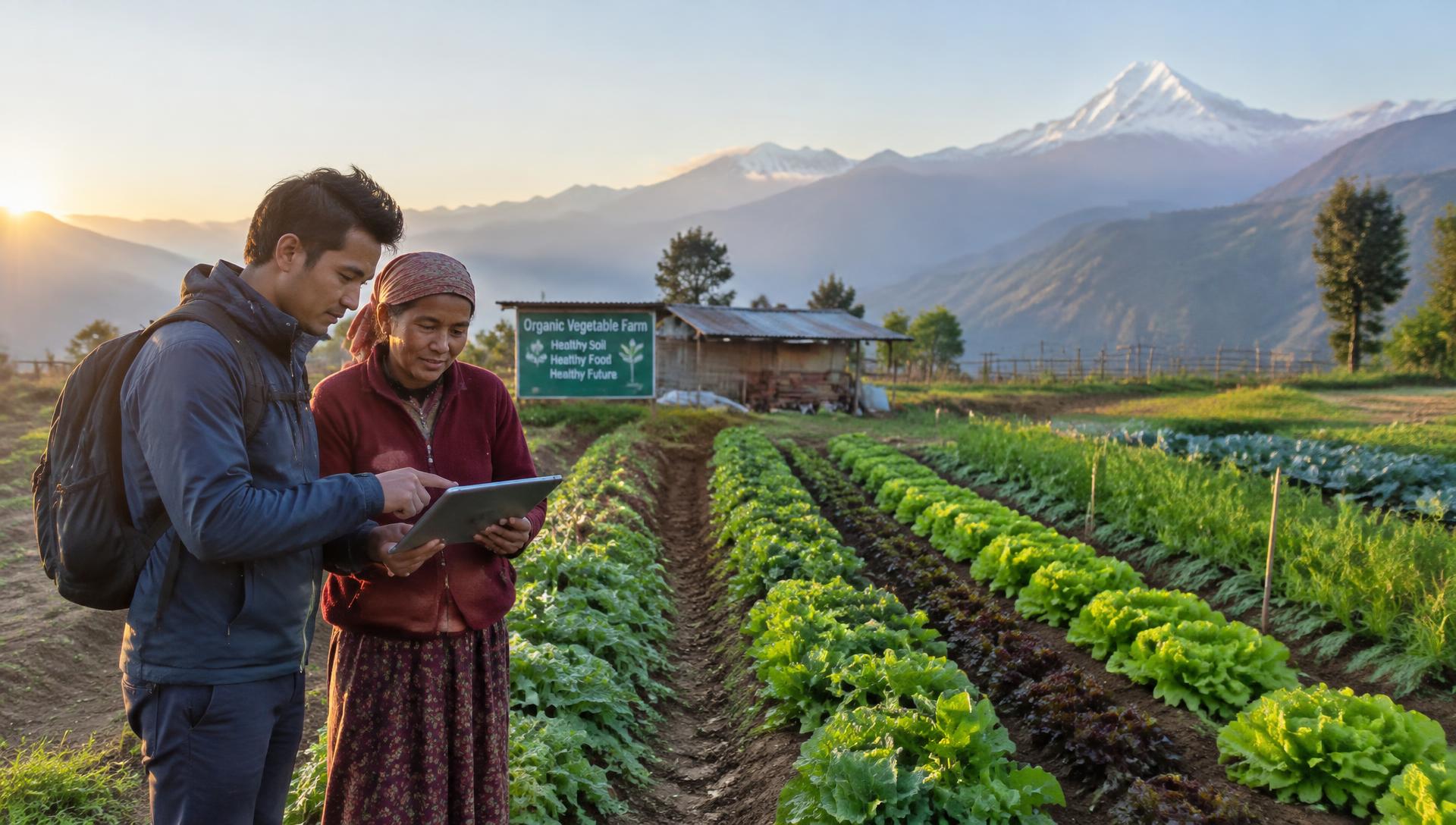
Most smallholders decide alone what to plant, and too often everyone plants the same crop at the same time. Prices collapse at harvest. Buddha Food System works the other way round: it starts from what buyers need, then shares the production between farms through one network-wide crop plan.
1.From demand to the field
Each season starts with demand: volumes agreed with industrial partners, the needs of local markets supplied by L1 clusters, and export windows. BFS translates this demand into a crop mix, then into a plan per cluster and per farm.
2.The crop mix
The network grows a balanced mix, set by BFS and adjusted every season. The current reference mix includes:
- about 20% cash crops, such as cosmetic plants;
- about 17% tomatoes;
- about 23% eggplants;
- the rest in vegetables, pulses and rotation crops suited to each region.
3.Who decides what
| Level | Planning role |
|---|---|
| BFS | Sets the crop mix, calendars and standards; matches supply with contracts |
| L2 cluster | Adapts the plan to the region; plans inputs, storage and logistics |
| L1 cluster | Assigns plots and dates to each farm; follows progress week by week |
| Farm | Executes the plan, records work and yields, raises problems early |
4.Calendars and rotation
Sowing dates are staggered between farms, so harvests arrive in a steady flow rather than a peak. Rotations keep soils healthy and break pest cycles. Monsoon, dry season and altitude are built into each regional calendar.
5.Agronomy support
BFS agronomists and field staff visit farms, diagnose diseases, recommend organic treatments and update the plan when weather or pests change the picture. Knowledge learned on one farm is shared with every farm.
6.What investors and buyers get
- predictable volumes and harvest dates;
- fewer losses from overproduction;
- farm yields that can be compared and followed;
- a data trail from the plan to the harvest.
Related: Procurement · Supply chain · Access to market · Magic Organic
Parts of this page describe the intended operating model and will be refined as the network grows. Figures are working assumptions unless they come from the live financial model.