
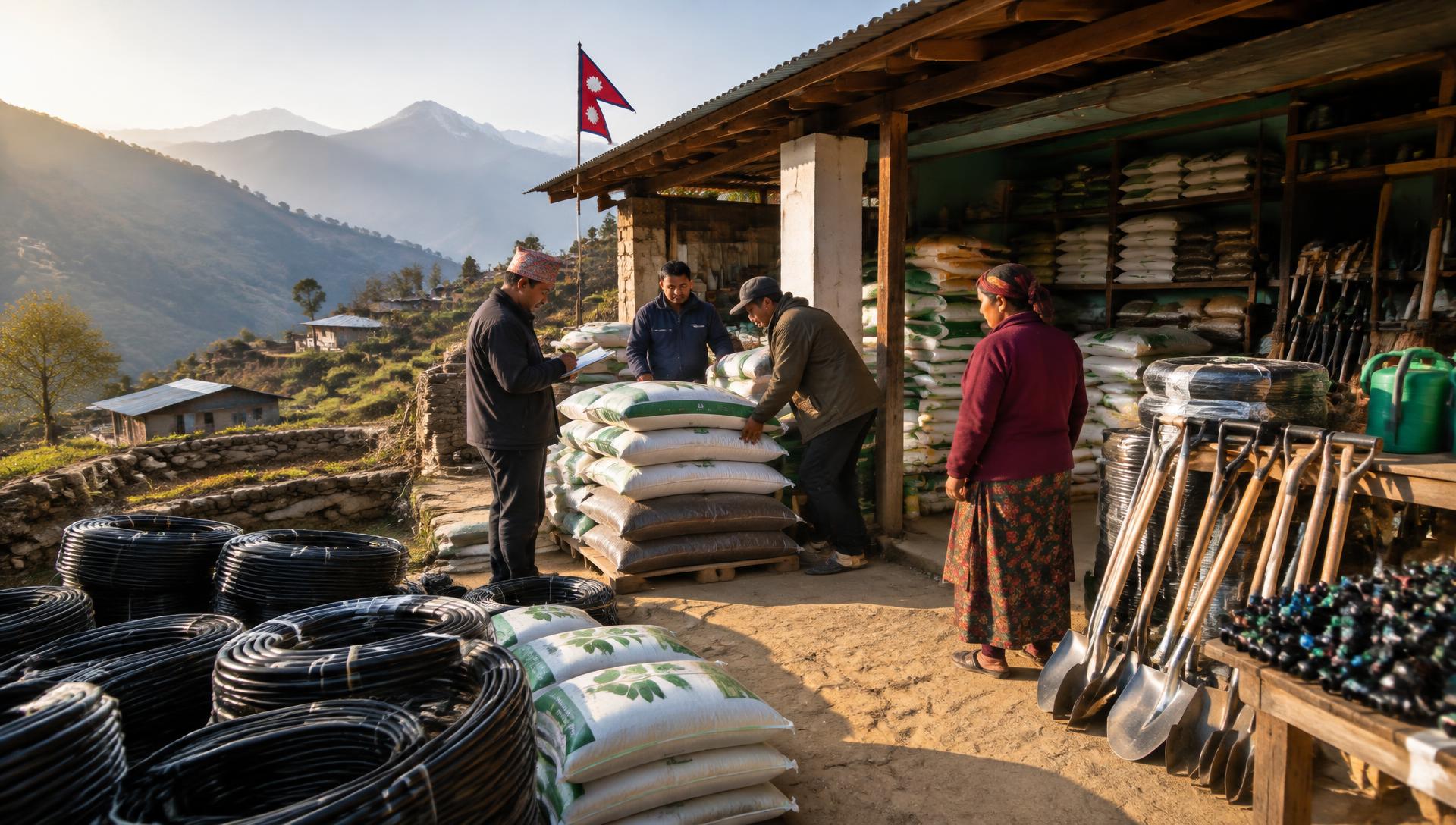
A single small farm buys in small quantities, at retail prices, with little control over quality. Buddha Food System buys for the whole network at once. The farm gets better inputs at a lower cost, and buyers get the proof of what went into their food.
1.What is bought centrally
| Category | Examples |
|---|---|
| Seeds and seedlings | Certified organic or untreated seed, nursery seedlings |
| Soil and crop care | Compost, bio-fertilisers, organic plant protection |
| Equipment | Drip irrigation, tunnels, monsoon protection, tools |
| Packaging | Crates, sorting and packing material |
| Digital and sensors | Soil and weather sensors, phones, farm software |
2.Why buying together matters
- Price: volume discounts and fewer intermediaries.
- Quality: approved suppliers, organic standards, tested seed.
- Timing: inputs arrive before sowing, as set in the crop plan.
- Cash: the farm does not have to pre-finance its inputs alone.
3.How it flows
BFS negotiates framework contracts with suppliers. L2 clusters hold regional stock and organise delivery. L1 clusters distribute to farms according to the crop plan. Each delivery is recorded against the farm that receives it.
4.Equipment in the farm package
The initial equipment of each farm is bought through the same channel and financed within the farm package. Standard equipment makes maintenance, spare parts and training simpler across the whole network.
5.Traceability of inputs
Because every input is bought and recorded centrally, BFS can show which seed, compost and treatment was used on which plot. This is the basis for organic certification and for the environmental data that buyers need.
6.What investors and buyers get
- lower and more stable production costs;
- consistent quality across farms;
- an audit trail from supplier to plot;
- less risk of input shortages at sowing time.
Related: Planning · Supply chain · Traceability & data
Parts of this page describe the intended operating model and will be refined as the network grows. Figures are working assumptions unless they come from the live financial model.