
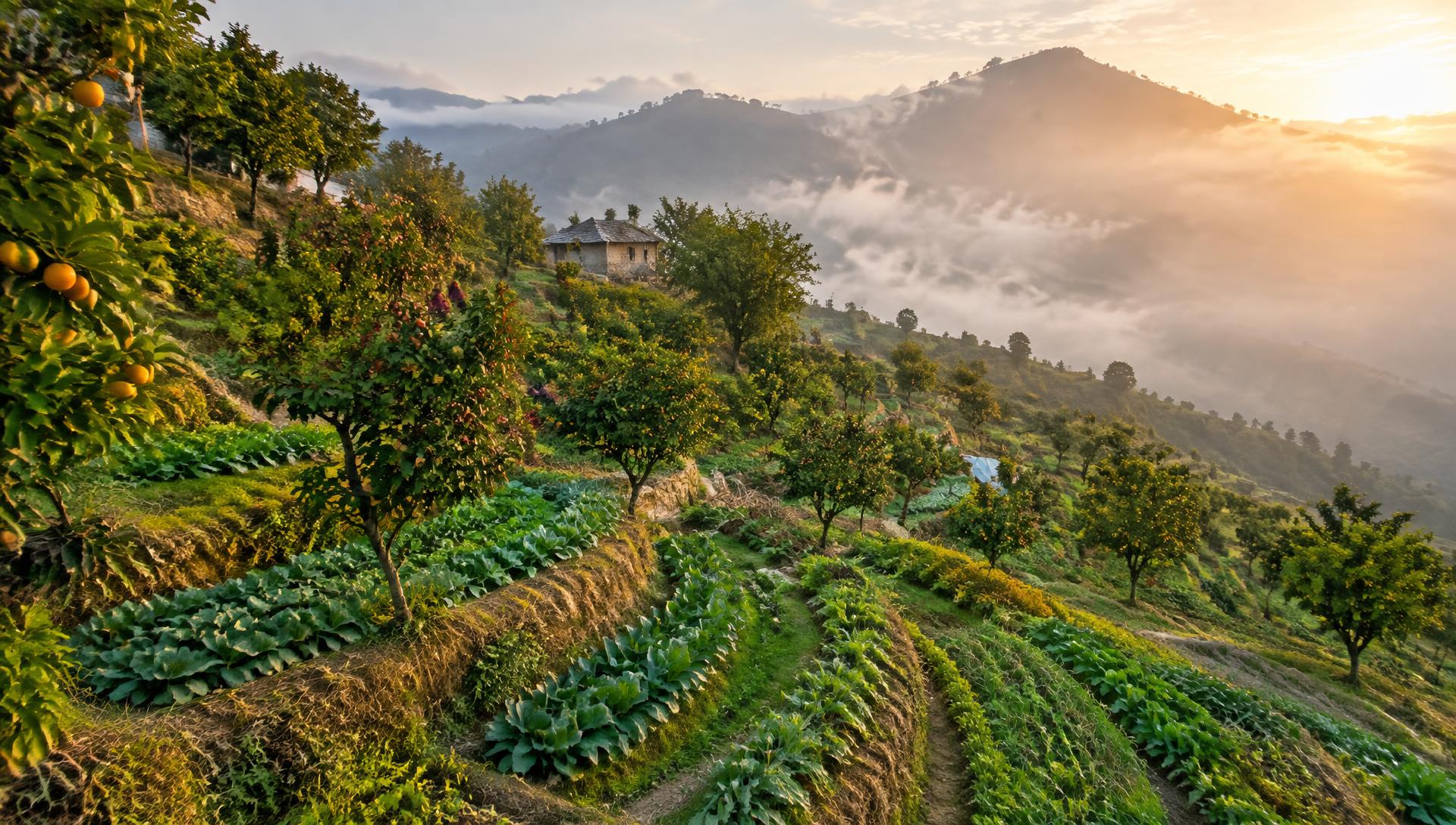
Buddha Food System farms are built on agroecology: we restore the ecological functions of the soil — soil life, water, nutrients and biodiversity. Lower emissions, stored carbon and resilience to climate shocks follow from that work, and we measure them farm by farm.
1.Restoring the functions of the soil
- soil life: compost and crop residues feed the organisms that feed the plants;
- water: organic matter and mulch let the soil hold water in the dry season and absorb monsoon rains;
- nutrients: compost, cow dung and nitrogen-fixing legumes recycle fertility on the farm;
- biodiversity: rotations, mixed crops, hedges and trees keep pests in balance without chemicals;
- structure: permanent beds and soils that are never left bare stop erosion and compaction.
2.Practices that lower emissions
- organic fertility made locally instead of imported synthetic fertilisers;
- drip irrigation that saves water and energy;
- trees and hedges on farm edges (agroforestry);
- short supply chains and fewer losses.
3.Measuring, not guessing
Sensors, soil samples and practice records give the data needed to estimate emissions and carbon stored, farm by farm. The L2 clusters run the measurement tools: drones, sensors and data aggregation.
4.Carbon credits and how they are shared
| Share | Goes to | Why |
|---|---|---|
| About 50% | Farms | They change practices and carry the work |
| About 10% | L2 clusters | They measure and aggregate the data |
| About 40% | BFS | It structures, certifies and sells the credits |
5.Adaptation and resilience
Diverse crops, healthy soils, water management and insurance make farms more resilient to heavy monsoons, droughts and heat. Climate risk is also spread across regions and river basins.
6.What buyers and investors get
- lower-emission supply for scope 3 targets;
- measured carbon data, farm by farm;
- a share of carbon value that reaches farmers;
- farms better able to survive climate shocks.
Related: Agroecology — the science behind the method · Traceability & data · Farmer income & decent work · Financial engineering
Parts of this page describe the intended operating model and will be refined as the network grows. Figures are working assumptions unless they come from the live financial model.