
Bio-intensive growing explains how a small farm produces a lot. Biodynamics explains how it builds its own fertility. Agroecology is the science that holds both together. It studies the farm as an ecosystem and asks a simple question: which natural functions make a field fertile, and how can we restore them?
Agroecology is recognised internationally as a science, a set of practices and a movement. The Food and Agriculture Organization of the United Nations describes it through ten elements, and the UN High Level Panel of Experts on food security through thirteen principles. Buddha Food System uses this framework as its scientific foundation. We speak of regenerating soils because that is the result; agroecology is how we get there, and how we can prove it.
1.Why soils stopped working
In much of the Terai, decades of monoculture, burnt residues, bare soils between seasons and growing use of imported chemical fertilisers have worn out the land. Organic matter falls, soil life thins out, the soil compacts, holds less water and loses its nutrients with the monsoon rains. Farmers then need more inputs for the same harvest. The problem is not only a lack of fertiliser: the soil has lost the functions that used to feed the plants for free.
2.Soil life, the engine of fertility
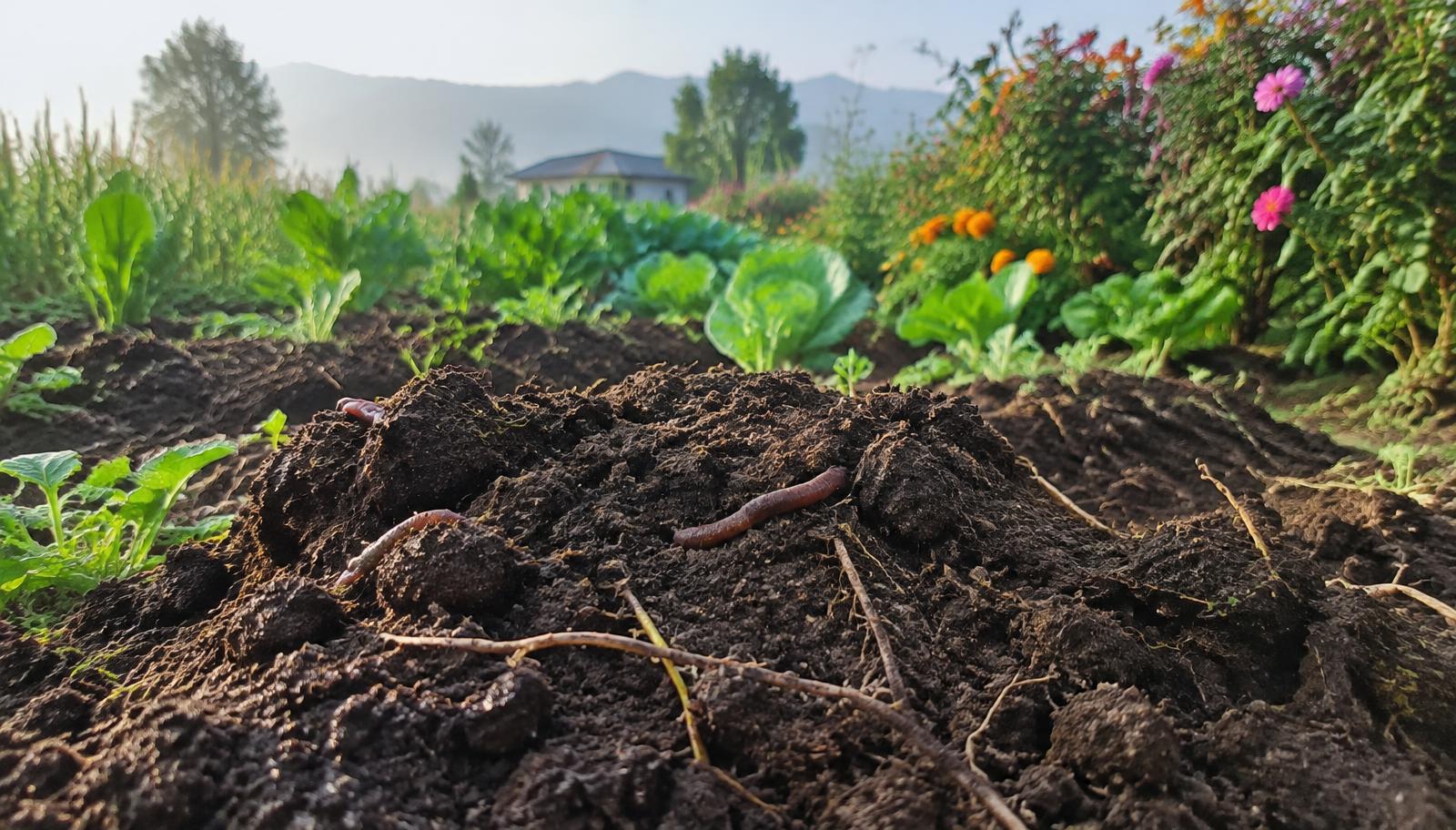
A fertile soil is alive. Bacteria, fungi, earthworms and countless small organisms break down organic matter, release nutrients at the pace plants need them, build a crumbly structure and protect roots against disease. Everything we do starts by feeding this life: compost, crop residues returned to the soil, permanent beds that are never ploughed deeply, and a soil that is almost never left bare.
3.Closing the water and nutrient cycles
Organic matter works like a sponge: each extra percent helps the soil hold much more water through the dry season and absorb heavy monsoon rains instead of letting them run off with the topsoil. Mulch and drip irrigation keep water where the roots are. On the nutrient side, compost, cow dung from livestock, legumes that fix nitrogen from the air and deep-rooted plants recycle what the farm needs on site. Nutrients stay in the farm instead of arriving in bags and leaving with erosion.
4.Biodiversity as natural protection
A diverse farm is harder for pests to invade. Crop rotations, mixed plantings, flower strips, hedges and trees shelter birds, pollinators and insects that eat the pests. Diversity above the ground supports diversity below it. This is how our farms grow vegetables without chemical pesticides: not by fighting each pest, but by building a landscape where no pest can take over.
5.Where bio-intensive, biodynamics and compost fit
Each practice of the method answers one ecological function. Bio-intensive growing uses space, light and time to the full on permanent beds, so every square metre stays covered and productive. Biodynamics looks after the farm as a living whole and builds fertility with compost and careful observation of natural rhythms. The compost factory and livestock businesses supply the organic matter that the whole network needs. Tharu knowledge brings generations of experience with local seeds, water and seasons. Agroecology is the common language that explains why these practices work together.
6.Resilience against a changing climate
Heavier monsoons, longer droughts and heat waves are already hitting Nepal. A living soil that holds water, a variety of crops that do not all fail at once, and trees that give shade and wind protection make farms far more resilient. Restoring soil functions is first a way to protect the harvest, and so the farmer's income. Storing carbon in soils and trees comes as a measurable consequence.
7.Measured, not claimed
Because it is a science, agroecology can be measured. Farm by farm, the network tracks soil organic matter, soil life, water holding, crop diversity and the inputs used, and compares them over the years. These measurements guide farmers, show partners real progress and form the basis of any carbon result. The goal is simple: every season, the soil should be a little more alive than the season before.
Related: Bio-intensive market gardening · Biodynamics · Compost & livestock · Climate & carbon